Calling a tow truck is the single safest decision you can make after your vehicle sustains damage, because driving a compromised car risks mechanical failure, insurance denial, and legal penalties that far outweigh the cost of towing services. The towed vs. driving damaged debate is not really a debate at all once you understand what happens inside your drivetrain, suspension, and safety systems when you push a damaged vehicle down the road. The U.S. towing industry handles 35 million transports annually, and a significant share of damage claims trace back to method mismatches and drivers who attempted to limp home first. This guide explains exactly why a tow truck beats driving damaged, what the hidden risks look like in practice, and how to make the right call fast.
Why tow truck beats driving damaged: the core case
Driving a damaged vehicle is not just uncomfortable. It is a decision that can turn a $500 repair into a $5,000 one. Progressive drivetrain failure is the most common outcome when drivers push a compromised car, because damage to frame components, control arms, and tie rods that appears minor at first worsens rapidly under load and road vibration. The benefits of towing cars over driving them come down to one principle: stopping the damage clock the moment the incident happens.
Professional towing, specifically flatbed towing, lifts all four wheels off the ground and eliminates every source of additional mechanical stress. A tow truck operator assesses your vehicle’s condition, selects the right method, and transports it without adding a single mile of wear to an already weakened system. That protection is worth far more than the cost of towing services in almost every scenario.
What are the hidden mechanical risks of driving a damaged vehicle?
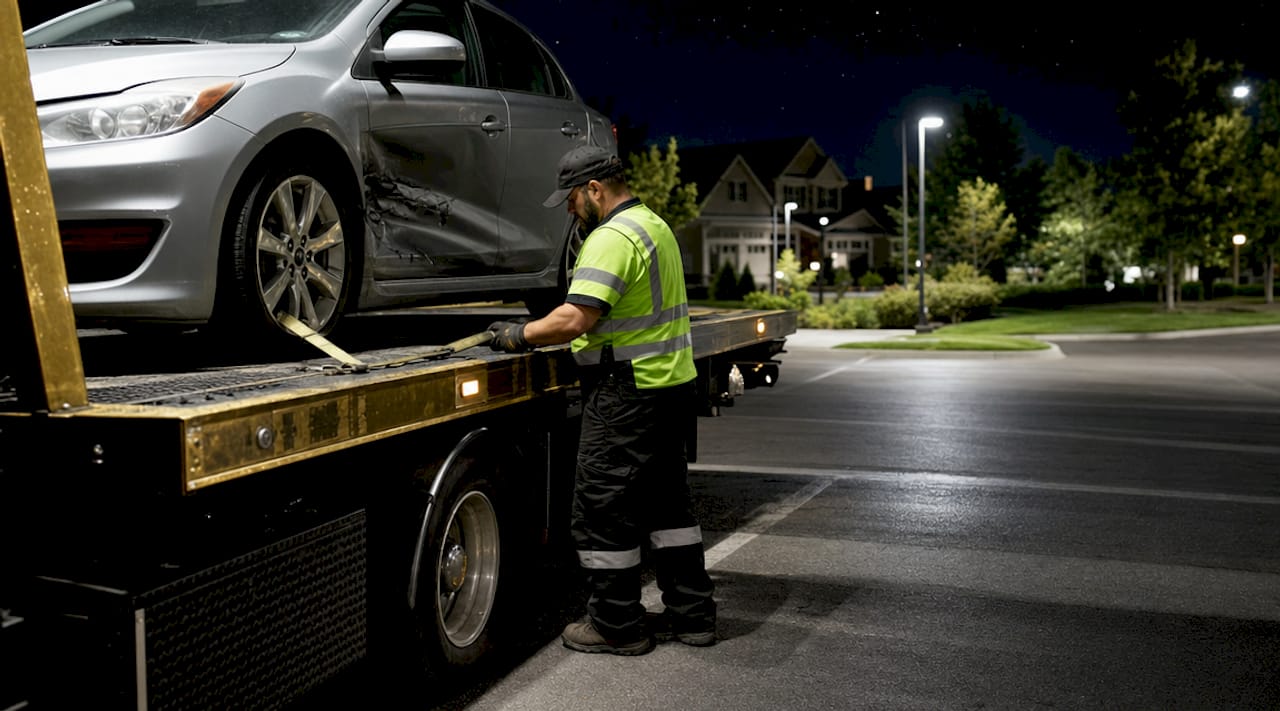
Most drivers make the same mistake: they confuse a car that starts and moves with a car that is safe to drive. A vehicle may run but still be unsafe due to hidden damage affecting critical safety systems, including radar sensors, cameras, and steering geometry that modern Advanced Driver Assistance Systems (ADAS) depend on. A misaligned sensor after a collision can cause lane-keeping or automatic braking to behave unpredictably, putting you and other drivers at serious risk.
The mechanical picture gets worse when you consider specific drivetrain types. Automatic transmissions rely on engine power to circulate fluid. Towing with drive wheels on the ground and the engine off causes rapid transmission overheating and failure, a repair that routinely exceeds $2,000. AWD and electric vehicles face an even steeper risk: any wheel turning on the road during transport can cause catastrophic differential damage.
Here are the warning signs that your vehicle is not safe to drive after damage:
- Fluid leaks under the car. Oil, coolant, or transmission fluid on the ground signals sudden control loss risk if the leak worsens while driving.
- Visible tire or wheel damage. A bent rim or bulging sidewall can blow out at highway speed with no warning.
- Steering that pulls or feels loose. This points to damaged tie rods or control arms that can fail completely mid-turn.
- Warning lights for airbags, ABS, or traction control. These systems are disabled or compromised and will not protect you in a second incident.
- Unusual grinding, scraping, or clunking sounds. These indicate contact between components that should never touch, and driving worsens the damage with every rotation.
Pro Tip: Take photos of your vehicle from all four sides before the tow truck arrives. This documents the pre-tow condition and protects you if any dispute arises during the insurance claim process.
How does towing protect your vehicle better than driving it?
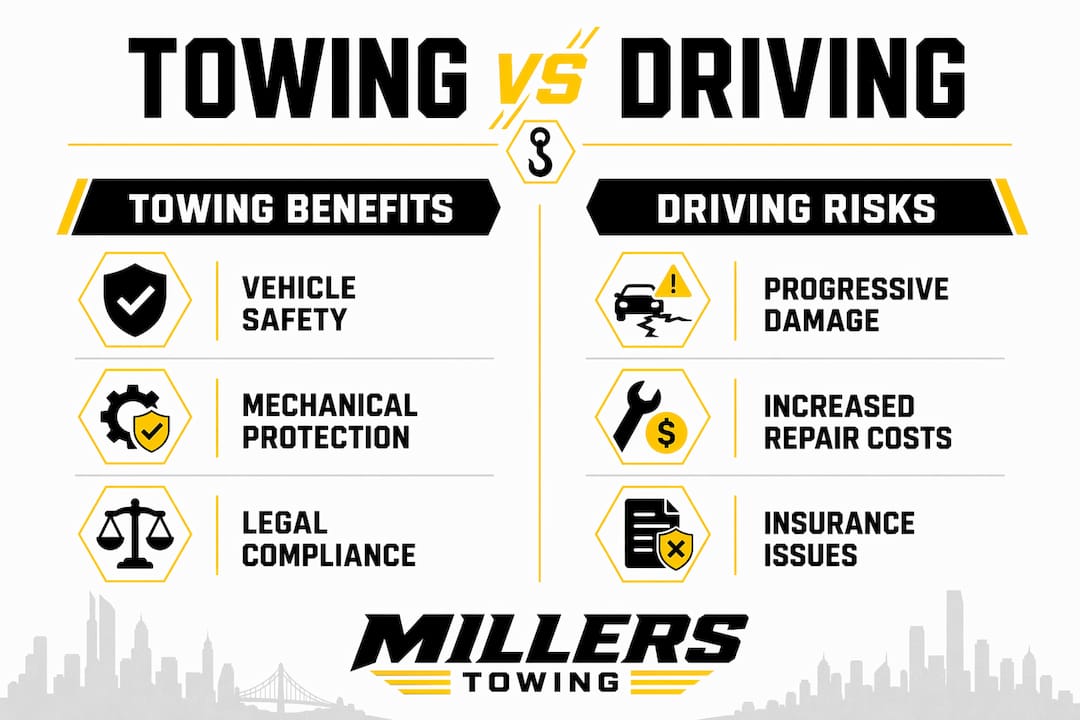
Flatbed towing is the gold standard for damaged vehicle transport, and the reason is mechanical: all four wheels leave the ground, so zero drivetrain stress occurs during the move. Improper towing methods for AWD, 4WD, and EVs can void manufacturer warranties and generate repair costs exceeding $2,000, which means the method your tow operator chooses matters as much as the decision to tow in the first place. Manufacturers including Tesla, BMW, Subaru, and Rivian specifically require flatbed transport to keep warranties valid.
Wheel-lift towing, where the front or rear wheels are raised while the others roll on the road, is safe only for front-wheel-drive or rear-wheel-drive vehicles with no existing damage. For anything else, it introduces exactly the kind of drivetrain stress you are trying to avoid. When a driver insists on wheel-lift towing against an operator’s recommendation, tow operators often require damage waivers, shifting full liability for any resulting damage back to the vehicle owner.
| Towing method | Best for | Risk level for damaged vehicles |
|---|---|---|
| Flatbed | All vehicles, especially AWD, EV, luxury, and damaged | Very low. All wheels off the ground. |
| Wheel-lift | FWD or RWD with no existing damage | Moderate to high. Drive wheels may still turn. |
| Tow dolly | FWD vehicles only, short distances | High for AWD or damaged vehicles. |
Flatbed towing costs $15 to $50 more than wheel-lift, but that premium eliminates drivetrain stress entirely. Paying an extra $40 to avoid a $2,000 transmission repair is not a close call. A licensed tow operator also uses proper tie-down techniques to prevent cosmetic damage during transport, something that matters when you are already filing an insurance claim and do not want additional scratches or dents complicating the process.
Pro Tip: When you call for a tow, tell the dispatcher your vehicle’s drivetrain type: front-wheel drive, rear-wheel drive, all-wheel drive, or electric. This single detail determines which tow method is safest for your car and helps the operator arrive with the right equipment.
What are the legal and insurance risks of driving damaged?
Driving a structurally compromised vehicle is not just a mechanical gamble. It carries real legal exposure. In many U.S. states, operating a vehicle with known safety defects can result in fines, citations, or in serious cases, license suspension. The legal standard is straightforward: if you knew the vehicle was unsafe and drove it anyway, you bear responsibility for any resulting accident or injury.
The insurance angle is equally serious. Insurers may deny repair claims if damage worsens because the driver chose to operate the vehicle after the initial incident. This is classified as negligence in most policy language, and it gives the insurer grounds to reject coverage for the additional damage. That means you could end up paying out of pocket for repairs that would have been fully covered if you had called a tow truck immediately.
Consider these specific legal and insurance risks before deciding to drive:
- Driving without insurance penalties. If your vehicle is deemed unroadworthy and you are involved in a second incident, your insurer may treat the situation as an uninsured event, leaving you fully liable.
- Liability for third-party damage. If your compromised vehicle causes an accident, you face personal liability for injuries and property damage to others.
- Documentation gaps. Driving the vehicle after damage makes it harder to prove which damage occurred in the original incident and which happened afterward, complicating your claim.
- Voided roadside assistance coverage. Some roadside assistance plans require you to call for help immediately. Driving first and calling later can void your eligibility for reimbursement.
Towing immediately after an incident creates a clear, documented record of the vehicle’s condition at the time of the event. That record is your best protection during the claims process.
How to decide between driving or calling a tow truck
The practical decision comes down to a fast, honest assessment of your vehicle’s condition. Follow these steps when you are not sure what to do:
- Check for fluid leaks. Walk around the vehicle and look under it. Any fluid on the ground means you call for an emergency tow truck service immediately.
- Inspect all four tires and wheels. If any tire is flat, bulging, or the rim is visibly bent, the vehicle is not safe to move under its own power.
- Test the steering. Sit in the driver’s seat and turn the wheel gently. If it pulls hard to one side, feels loose, or makes noise, stop there.
- Check warning lights. Any airbag, ABS, or stability control light means a safety system is offline. Do not drive.
- Assess visibility and lighting. Broken headlights, taillights, or a cracked windshield that blocks your sightline are legal violations in most states, not just safety concerns.
- Call a licensed, insured towing service. If you are unsure after any of these checks, that uncertainty is your answer. A reliable towing service costs far less than the repairs, fines, or liability that come from guessing wrong.
Rushing to drive a damaged vehicle to avoid towing delays leads to far costlier repairs. The cost of towing services in Wichita typically ranges from $75 to $150 for a local tow, a fraction of what a single secondary mechanical failure costs. Understanding towing cost structures before an emergency helps you make a faster, calmer decision when you actually need help.
Key takeaways
A tow truck beats driving damaged because professional transport stops mechanical deterioration, protects your insurance claim, and keeps you legally clear from the moment of the incident.
| Point | Details |
|---|---|
| Towing stops damage progression | Driving a damaged vehicle worsens drivetrain, suspension, and frame damage with every mile. |
| Flatbed is the safest method | Flatbed towing lifts all wheels off the ground, protecting AWD, EV, and luxury vehicles from further harm. |
| Insurance claims depend on it | Driving after damage gives insurers grounds to deny coverage for any worsening of the original damage. |
| Legal risk is real | Operating a vehicle with known safety defects can result in fines, citations, and personal liability. |
| Cost comparison favors towing | A $75 to $150 local tow prevents repairs that routinely exceed $2,000 for transmission or drivetrain damage. |
Why I always tell drivers to tow first and ask questions later
After years of watching drivers make the same costly mistake, my honest view is this: the instinct to drive a damaged car home is almost always driven by the wrong calculation. Drivers focus on the visible cost of a tow and ignore the invisible cost of what happens inside the drivetrain, the insurance file, and the legal record when they choose to push through.
The cars that concern me most are the ones that seem fine. A vehicle that starts, moves, and shows no obvious exterior damage after a collision is the most dangerous scenario, because frame and structural damage often hides beneath cosmetic areas. The driver feels confident, drives home, and discovers three days later that the repair estimate doubled because the damage spread. I have seen this pattern repeat more times than I can count.
Towing is not an admission that something is seriously wrong. It is smart risk management. You are protecting your vehicle, your claim, and your liability with one phone call. The drivers who tow first consistently end up with lower total repair costs, cleaner insurance outcomes, and far less stress. That is not a coincidence.
— Virtual
Millerstowingict has you covered in Wichita
When your vehicle is damaged and you need fast, dependable help, Millerstowingict is ready 24 hours a day, 7 days a week across Wichita and the surrounding communities. The team operates both flatbed and wheel-lift equipment, so the right method is always available for your specific vehicle, whether it is an AWD crossover, an electric vehicle, or a standard sedan.
Every tow is handled by licensed, insured professionals who assess your vehicle’s condition before choosing the safest transport method. You get fast response, clear communication, and a team that treats your car with the same care you do. For 24/7 emergency towing in Wichita, call Millerstowingict and get your vehicle protected the right way from the first moment.
FAQ
Is it ever safe to drive a damaged vehicle?
Only if the damage is purely cosmetic, such as a small dent with no impact on tires, steering, fluids, or safety systems. Any warning light, fluid leak, or handling change means the vehicle should be towed, not driven.
How much does a tow truck cost compared to driving damaged?
A local tow in Wichita typically costs $75 to $150. Driving a damaged vehicle risks transmission or drivetrain repairs that exceed $2,000, making towing the far more affordable choice in most situations.
Can my insurance deny a claim if I drove the car after damage?
Yes. Insurers may deny coverage for damage that worsened because the driver operated the vehicle after the initial incident, classifying it as negligence under most policy terms.
What towing method is best for AWD and electric vehicles?
Flatbed towing is required for AWD, 4WD, and electric vehicles. Any wheel turning on the road during transport can cause catastrophic differential or drivetrain failure in these vehicle types.
What should I tell the tow dispatcher when I call?
Tell them your location, the nature of the damage, and your vehicle’s drivetrain type: front-wheel drive, rear-wheel drive, all-wheel drive, or electric. This helps the dispatcher send the right equipment and the right operator for your situation.