Vehicle recovery service types are specialized methods used to extract, stabilize, and transport disabled or stranded vehicles using equipment like winches, flatbed trucks, rotator cranes, and hydraulic lift arms. The industry term for this work is “vehicle recovery,” which goes beyond standard towing to include situations where a vehicle is in an abnormal position requiring rigging, stabilization, or off-road extraction. Knowing the difference between a soft pull, a flatbed transport, and a heavy-duty rotator recovery could save you time, money, and further vehicle damage the next time you’re stranded on a Kansas highway.
1. What are the primary vehicle recovery service types?
Recovery operations fall into five core categories, each matched to a specific type of incident. Using the wrong method risks additional vehicle damage or a longer wait for the right equipment.
- Soft recovery pulls a vehicle from soft ground, a shallow ditch, or mud using a winch line with minimal rigging. This is the fastest and least invasive method, typically used when the vehicle is still structurally sound and just needs a straight pull back to solid ground.
- Rigid tow (tow bar method) connects a disabled vehicle directly to the tow truck using a solid bar. This method suits short-distance moves where the towed vehicle’s wheels can still roll safely.
- Lift tow (underlift/wheel-lift) uses hydraulic arms to raise either the front or rear axle off the ground. Wheel-lift towing is faster and less expensive than flatbed but is not recommended for all-wheel-drive, low-clearance, or heavily damaged vehicles.
- Full transport (flatbed/rollback) loads the entire vehicle onto a flat platform, keeping all four wheels off the road. This is the safest option for luxury cars, electric vehicles, and any car with drivetrain or suspension damage.
- Winch-out and rotator crane recovery handles overturned vehicles, embankment extractions, and heavy commercial trucks. These operations involve complex rigging and, for heavy-duty work, require certified operators and equipment rated for loads over 26,000 lbs.
Each method requires different equipment and operator skill. Calling a provider who only carries a wheel-lift truck to a rollover scene means you will wait again for the right rig to arrive.
2. How towing and roadside assistance differ in recovery contexts
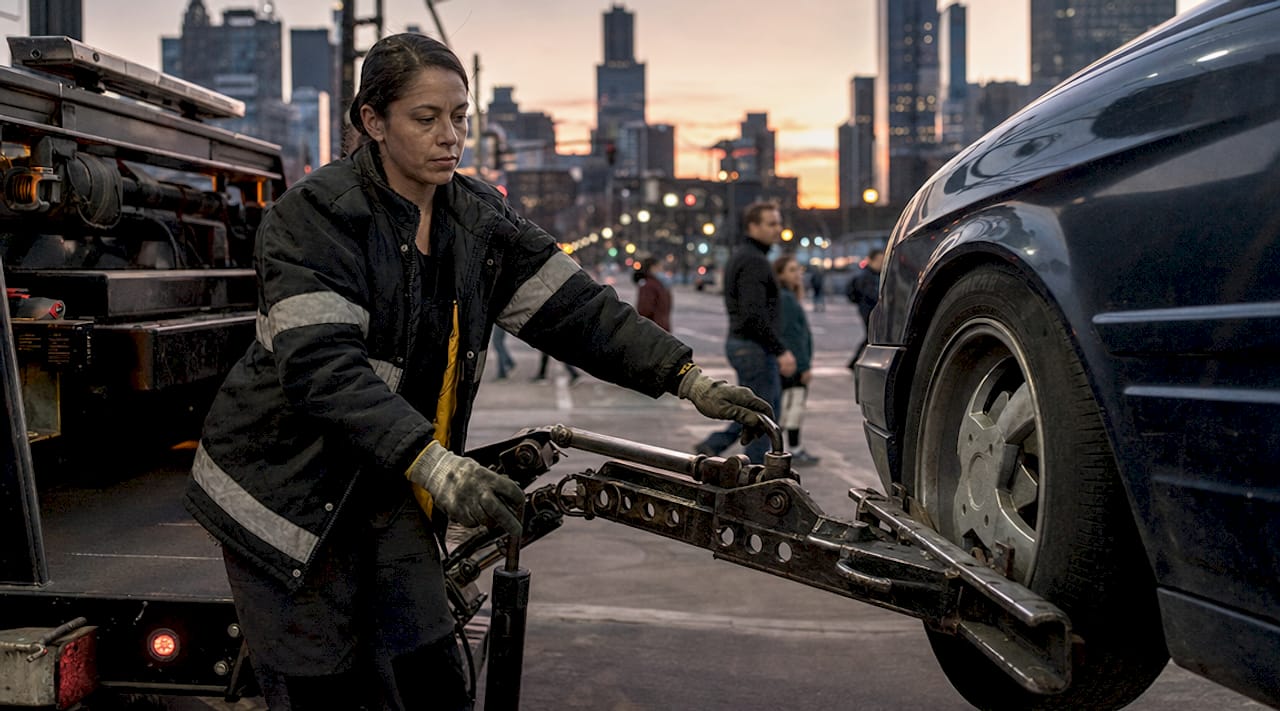
The key decision every driver faces is whether the vehicle needs an on-scene fix or transport. Misidentifying this need is one of the most common causes of delays during emergencies.
Here is how the two service categories break down:
- Roadside assistance provides on-site repairs without moving the vehicle. Common services include jump starts, tire changes, lockout help, and fuel delivery. If your car starts after a jump, you do not need a tow.
- Towing moves a vehicle that cannot be safely driven to a repair shop, dealership, or storage facility. The vehicle is loaded or attached to a tow truck for transport.
- Winching sits between both categories. A winch-out can be a simple roadside pull if the vehicle drives away afterward, or it can be the first step in a full recovery operation if the vehicle needs transport once freed.
- Accident recovery combines elements of both. After a collision, a provider may need to upright the vehicle, clear debris, and then transport it. This is neither pure roadside assistance nor standard towing.
- Long-distance transport moves a vehicle across cities or states, typically on a flatbed or enclosed carrier. This is a planned vehicle transport method rather than an emergency response.
Pro Tip: Before you call, ask yourself two questions: Can the car be driven after a quick fix? Is the vehicle on the road surface or off it? Your answers point directly to roadside assistance, a standard tow, or a full recovery operation.
3. Specialized methods for heavy or complex vehicle recoveries
Heavy-duty recovery is a separate discipline from standard towing, and the equipment differences are significant. Recovery operations vary by weight class: light-duty covers vehicles under 10,000 lbs, medium-duty covers 10,000 to 26,000 lbs, and heavy-duty covers anything above that threshold. Each class demands different rigging, winch ratings, and operator certification.
| Recovery scenario | Equipment used | Operator requirement |
|---|---|---|
| Overturned passenger car | Single rotator or integrated wrecker | Standard recovery certification |
| Semi-truck rollover | Heavy rotator crane, dual-winch rigging | Heavy-duty recovery certification |
| Vehicle in ditch or embankment | Winch with snatch block rigging | Light to medium-duty training |
| Flood or water recovery | Specialized floatation and drainage prep | Hazmat and water recovery training |
| Post-accident uprighting | Rotator crane with controlled lift | Advanced rigging certification |
Integrated carriers and rotators combine towing and recovery capabilities in one truck, making them the go-to choice for rollovers and vehicles stuck in difficult positions. These trucks carry rotating cranes and winches rated for heavy loads, which is why they cost more to dispatch and take longer to arrive. Paying for the right truck upfront is always cheaper than paying for a second call after the wrong truck fails to complete the job.
Ditch and embankment recoveries often require a snatch block setup, which redirects the winch cable to multiply pulling force without overstressing the winch motor. For ditch recovery in Wichita, this technique is used regularly on rural Kansas roads where vehicles slide off gravel shoulders.
Pro Tip: When calling for heavy recovery, tell the dispatcher the vehicle type, its position (upright, on its side, nose-down), and whether it is on pavement or off-road. That information determines which truck gets sent and how fast it arrives.
4. How tow truck types match different recovery situations
Not every tow truck handles every job. Matching the truck type to the vehicle and situation is what separates a fast, safe recovery from a botched one that causes additional damage.
- Flatbed (rollback) trucks are the safest vehicle transport method for electric vehicles, all-wheel-drive cars, low-clearance sports cars, and any vehicle with suspension damage. Flatbed towing keeps all four wheels off the ground, eliminating drivetrain stress entirely.
- Wheel-lift trucks are fast and cost-effective for short-distance tows of standard front-wheel-drive or rear-wheel-drive vehicles. They lift two wheels and let the other two roll. They are not suitable for AWD vehicles or cars with frame damage.
- Hook-and-chain trucks are largely obsolete for passenger vehicles because the chain contact damages bumpers and frames. You may still see them used for junk vehicles or off-road extractions where cosmetic damage is not a concern.
- Integrated carriers combine a wheel-lift and a boom winch in one unit, giving operators flexibility for both standard tows and light recovery work.
- Heavy rotator trucks handle commercial vehicles, buses, and large equipment. For tow truck services in Wichita, having access to the right class of truck for each call is what makes a provider genuinely reliable.
- Motorcycle recovery requires a specialized flatbed or a bike-specific cradle to prevent tipping and frame damage. Standard wheel-lift trucks cannot safely transport motorcycles.
A provider who is transparent about their fleet tells you exactly which truck is coming and why. If a dispatcher cannot answer that question, that is a sign worth noting before you commit to the call.
5. Roadside assistance options that prevent a tow entirely
Many drivers call for a tow when a faster, cheaper roadside fix would solve the problem on the spot. Roadside assistance provides on-site fixes without vehicle transport, and these services are typically faster to respond than a full tow.
The most common roadside assistance options include:
- Jump start: A dead battery is the most frequent roadside call. A technician connects a portable jump pack or cables from their truck to restart your engine. If the car starts and holds a charge, no tow is needed.
- Tire change: A flat tire with a functional spare takes about 15 minutes to swap. If you have no spare or the rim is damaged, a tow becomes necessary.
- Lockout service: A locked vehicle with keys inside is solved with slim jim tools or air wedge kits. No transport required.
- Fuel delivery: Running out of gas is a pure roadside fix. A technician brings enough fuel to get you to the nearest station.
- Minor winch-out: If your car slid off a driveway or got stuck in light mud, a quick pull may free it without any transport at all.
Knowing these options exist means you call the right service the first time. Calling for a tow when you need a jump start costs more and takes longer. Calling for roadside assistance when your car is on its roof costs you critical time.
Key takeaways
Choosing the right vehicle recovery service type depends on whether your vehicle needs an on-scene fix, a standard tow, or a specialized extraction using heavy equipment.
| Point | Details |
|---|---|
| Match method to situation | Soft recovery, flatbed transport, and rotator crane work each suit different incidents and vehicle conditions. |
| Roadside vs. towing distinction | If the vehicle can be fixed on-site, roadside assistance is faster and cheaper than dispatching a tow truck. |
| Weight class determines equipment | Light, medium, and heavy-duty recoveries require different trucks, winch ratings, and operator certifications. |
| Flatbed is safest for most vehicles | EVs, AWD cars, and damaged vehicles should always use flatbed transport to avoid drivetrain damage. |
| Dispatcher information matters | Telling dispatch your vehicle type, position, and terrain gets the right truck to you faster. |
What I’ve learned from watching drivers call the wrong service
After years of working alongside recovery operators in Wichita, the single most consistent mistake I see is drivers calling for a tow when they need a winch-out, or calling for roadside assistance when the car is upside down in a ditch. Both errors cost time and money. The auto recovery process in Kansas is not complicated once you understand the categories, but most drivers never think about it until they are standing on the shoulder of a dark highway.
The other pattern I notice is drivers accepting whatever truck shows up without asking if it is the right one for their vehicle. A wheel-lift truck sent to recover an all-wheel-drive SUV with suspension damage will either fail to complete the job or cause additional damage. Asking “what type of truck are you sending and why” is a completely reasonable question, and a good provider will answer it without hesitation. Choosing a reliable tow company means choosing one that is transparent about equipment before the truck rolls.
My honest advice: save the number of a local provider you trust before you need them. Researching recovery services from the side of a highway at midnight is not the time to comparison shop.
— Virtual
Millerstowingict is ready when you need fast, reliable recovery in Wichita
When you need emergency vehicle recovery in Wichita or the surrounding communities, Millerstowingict has the equipment and trained operators to handle every situation on this list. From quick winching services and roadside assistance to heavy-duty extractions and long-distance flatbed transport, the team responds 24 hours a day, 7 days a week.
Whether your car is stuck in a ditch, your battery is dead, or you need a safe flatbed transport for your EV or luxury vehicle, Millerstowingict is the dependable call. Save the number now so you are not searching for help when every second counts.
FAQ
What is the difference between towing and vehicle recovery?
Towing moves a disabled vehicle from one location to another, while vehicle recovery extracts a vehicle from an abnormal position such as a ditch, embankment, or rollover before transport can occur. Recovery often requires winching, rigging, or crane equipment that standard tow trucks do not carry.
When should I call roadside assistance instead of a tow truck?
Call roadside assistance when your vehicle can be fixed on-site, such as a dead battery, flat tire, lockout, or empty fuel tank. Call for a tow when the vehicle cannot be safely driven or when it needs to be transported to a repair facility.
Is flatbed towing always better than wheel-lift towing?
Flatbed towing is the safest option for electric vehicles, all-wheel-drive cars, low-clearance vehicles, and any car with drivetrain or suspension damage. Wheel-lift towing is acceptable for short-distance moves of standard front or rear-wheel-drive vehicles in good condition.
What equipment is used for heavy-duty vehicle recovery?
Heavy-duty recovery uses rotator cranes, integrated wrecker units, and dual-winch rigging systems rated for loads over 26,000 lbs. Operators handling these recoveries require specific certifications beyond standard towing licenses.
Does winching count as roadside assistance or towing?
Winching can be either, depending on the outcome. If the vehicle is pulled free and driven away, it falls under roadside assistance. If the vehicle needs transport after being freed, the winch-out becomes the first step in a full towing and recovery operation.