Updated November 2026 by the Miller’s Towing & Recovery dispatch team
Quick answer: Driving a damaged car can turn a repairable problem into a total loss. Hidden damage to the wheels, suspension, cooling system, or brakes can fail on the road, put you and others at risk, and give your insurer a reason to dispute the claim. If the car leaks fluids, pulls hard, shows warning lights, or has a broken light or loose part, have it towed.
After a fender bender on Rock Road or a pothole hit on I-135, the first thought is usually, “It still runs. I will just drive it home.” Sometimes that works. Often it costs more than the tow would have. Here is why a tow is usually the smarter choice, and how to tell when a car is truly safe to drive.
Damage You Cannot See From the Driver Seat
A crash or hard hit can damage parts that look fine from outside:
- Suspension and alignment. A bent tie rod or control arm can make the car pull or wander, and it can fail at speed.
- Wheels and tires. A cracked rim or a bulge in the sidewall can lead to a blowout.
- Cooling system. A pushed in radiator can leak. An engine that overheats for even a few miles can warp the head or ruin the engine.
- Brakes. A damaged brake line can leak fluid, and pedal feel can fade without warning.
- Steering and airbags. Damage to the steering column or sensors can affect how the car handles and whether airbags work next time.
Safety and Legal Risks
A car with a broken headlight, a dangling bumper, or a cracked windshield in the driver’s view can get you pulled over. Loose parts can fall onto the road and hit the car behind you. If the car fails on a busy road like Kellogg or I-235, you are stopped in traffic with a damaged car and no shoulder.
In Kansas, a police report is required when a crash causes an injury, a death, or $1,000 or more in damage. Repair costs add up fast, so many crashes that look minor pass that line. Do not leave the scene before the right report is made.
Insurance Reasons to Tow
Insurers pay for damage caused by the crash. If you drive a damaged car and it gets worse, for example an engine that overheats because the radiator was leaking, the insurer may argue that extra damage came from your choice to drive, not the crash. Towing protects your claim. Collision coverage usually pays for a tow after a wreck, and the at fault driver’s insurer may cover it too. Keep the itemized receipt.
Signs Your Car Should Be Towed
| Warning sign | Why it matters |
|---|---|
| Fluid leaking under the car | Could be coolant, oil, brake, or fuel. All are risky to drive on. |
| Temperature gauge rising or steam | Driving can destroy the engine in minutes. |
| Car pulls hard or the wheel is off center | Bent steering or suspension parts. |
| A tire is low, bulging, or the rim is bent | Blowout risk. |
| Airbags went off | Often means frame or sensor damage. Many insurers want it towed. |
| Broken headlights, taillights, or mirrors | Unsafe at night and can get you ticketed. |
| Warning lights for brakes, ABS, or oil | Key systems may not work. |
| Hood, bumper, or panels loose | Parts can fall off at speed. |
When It May Be OK to Drive
If the damage is only cosmetic, like a small dent or scuff, all lights work, no warning lights are on, nothing is leaking, and the car drives straight, a short slow drive to a nearby shop may be fine. When in doubt, call. Dispatch can talk you through it.
What Happens When You Call for a Tow
- Get to a safe place, turn on your hazards, and call 911 if anyone is hurt.
- Call Miller’s at (316) 351-4754. Tell us where you are and what happened.
- You get the full price on the phone before we hook up.
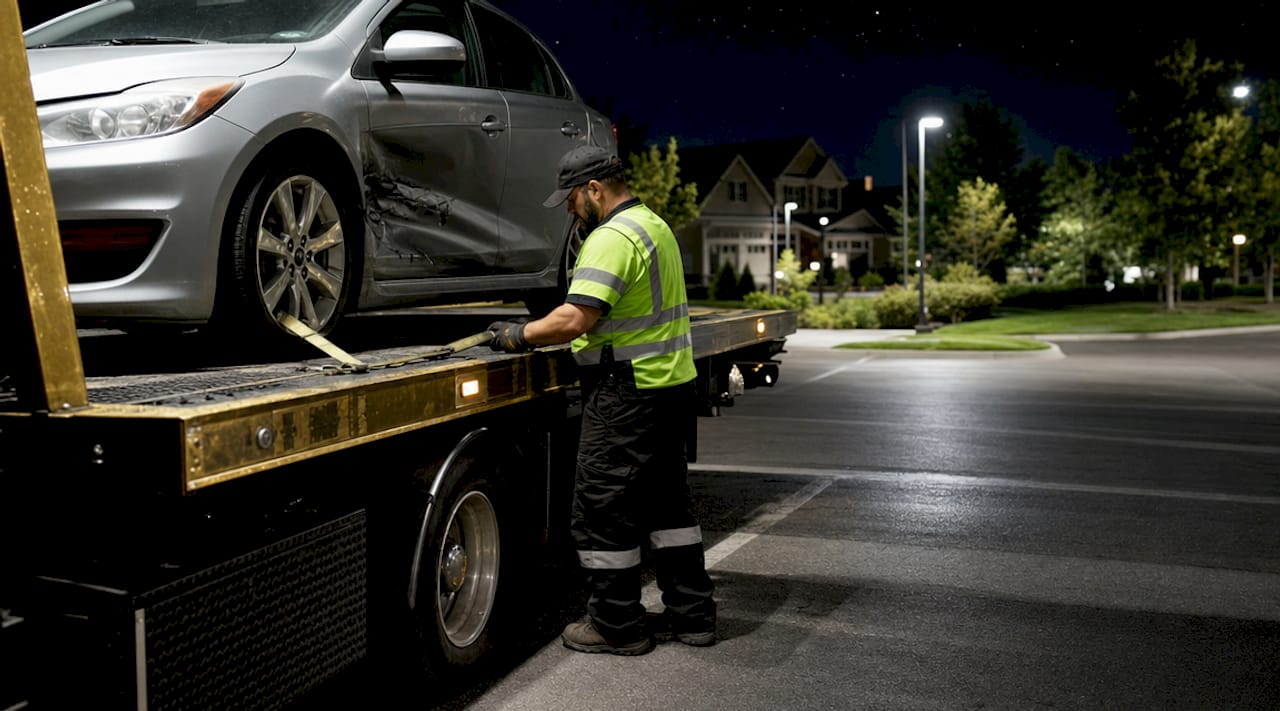
- We load the car on a flatbed and take it where you choose: your body shop, home, a dealer, or our yard at 4309 S Broadway.
After a police called crash in Wichita, you can ask the officer for Miller’s by name under WPD Policy 404. Read what to do after a car accident in Wichita for the full checklist.
Key Takeaways
- Hidden damage to suspension, wheels, cooling, and brakes can fail after the crash.
- Driving a damaged car can make the damage worse and hurt your insurance claim.
- Tow it if it leaks, overheats, pulls, has warning lights, or has loose parts.
- Kansas requires a police report for injury, death, or $1,000 or more in damage.
- Collision coverage usually pays for the tow. Keep the receipt.
Frequently Asked Questions
Is it safe to drive a car after an accident?
Only if the damage is cosmetic, all lights work, nothing leaks, no warning lights are on, and the car drives straight. If you are not sure, have it towed. Hidden damage to the suspension, brakes, or cooling system can fail on the road.
Will insurance pay for a tow after an accident?
Often, yes. Collision coverage usually pays to tow a wrecked car, and if the other driver was at fault, their insurer may cover it. Keep the itemized tow receipt.
Can driving a damaged car hurt my insurance claim?
It can. If damage gets worse because you drove the car, like an engine overheating from a leaking radiator, the insurer may say that extra damage was not caused by the crash.
Where should my damaged car be towed?
Wherever you choose: your body shop, your dealer, your home, or our yard at 4309 S Broadway while you talk to your insurance company.
Do I need a police report for a minor crash in Kansas?
A report is required when a crash causes an injury, a death, or $1,000 or more in damage. Repair costs add up fast, so many small crashes pass that amount.
Recommended Reading
- What to Do After a Car Accident in Wichita
- Accident and Vehicle Recovery in Wichita
- Flatbed Towing in Wichita
- The Real Cost of Towing in Wichita
Car damaged after a crash?
Do not risk it. Call dispatch any hour and we will flatbed it where you choose.