Updated November 2026 by the Miller’s Towing & Recovery dispatch team
Quick answer: Vehicle recovery equipment is the gear used to pull a stuck or wrecked vehicle back to a spot where it can be towed. The main types are winches and winch lines, snatch blocks, recovery straps and shackles, wheel lift and flatbed tow trucks, and, for semis and big rollovers, heavy wreckers and rotators. The right tool depends on the vehicle’s weight, where it sits, and the angle of the pull.
Most recovery calls in Wichita are not dramatic. A car slides into the ditch on K-96 during the first ice storm. A pickup sinks to the frame in a muddy field south of town. A sedan rolls onto its side after a crash on Kellogg. Each one needs a different set of tools, and using the wrong one can bend a frame, rip off a bumper, or hurt someone standing nearby.
This guide explains the main types of recovery equipment, what each one does well, where it falls short, and when you should stop and call a professional.
The Core Recovery Toolkit
These are the tools you will find on almost every recovery truck, and in a well packed off road kit.
- Winch and winch line. A winch winds a steel cable or synthetic rope onto a drum to pull a vehicle out of mud, snow, or a ditch. Synthetic rope is lighter and stores less energy, so it is less dangerous if it breaks.
- Snatch block. A pulley that redirects the winch line or doubles its pulling power. With the line run through a snatch block and back to the truck, a winch can pull close to twice its rated load.
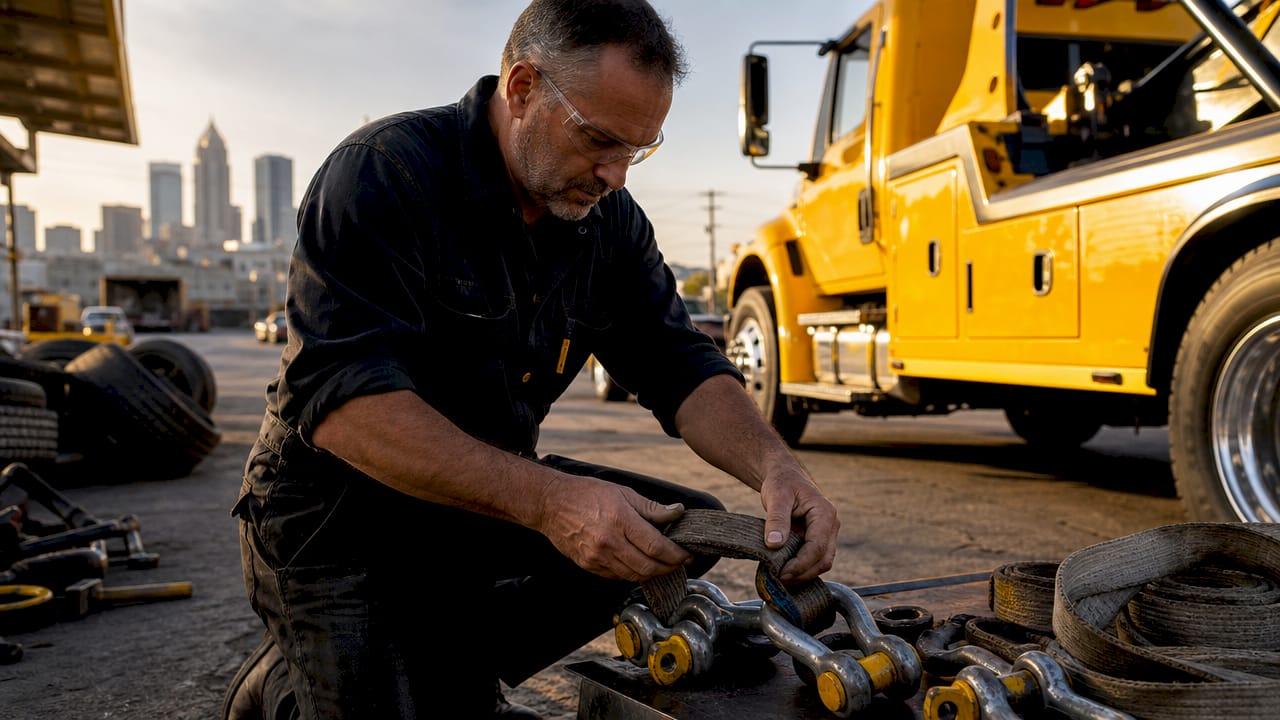
- Recovery straps. Kinetic straps stretch and spring back, which helps pop a stuck vehicle free. Static tow straps do not stretch. They are for steady towing on a hard surface, not for yanking a car out of the mud.
- Shackles and soft shackles. These connect straps and lines to rated recovery points. Soft shackles are made of synthetic rope and are less likely to fly if something fails.
- Tree saver straps and chains. These wrap around an anchor, like a tree, pole base, or the tow truck itself, to spread the load.
- Wheel dollies and skates. Small wheeled platforms that let a driver move a car with locked wheels or a missing tire.
Tow Trucks Used in Recovery
The truck matters as much as the straps. Here is how the common types compare.
| Truck type | Best for | Limits |
|---|---|---|
| Wheel lift | Fast pickups of cars that roll and steer, parking lot moves | Two wheels stay on the road, so it is not a fit for most AWD cars or badly damaged cars |
| Flatbed (rollback) | AWD, 4×4, electric, lowered, classic, and wrecked cars | Needs room to tilt the bed and load the car |
| Wrecker with boom | Lifting and pulling vehicles out of ditches and off embankments | Larger trucks cost more to send |
| Heavy wrecker or rotator | Semis, buses, and large trucks, including rollovers | Only a few companies run them, and rates are much higher |
Miller’s runs light duty trucks built for cars, SUVs, pickups, and vans, with flatbed towing for vehicles that must ride with all four wheels off the road. For a loaded semi or a bus on its side, you need a heavy duty company with a rotator. If you are not sure which you need, call dispatch and describe the vehicle. We will tell you straight.
Our guide on flatbed vs. wheel lift towing goes deeper on choosing the right truck.
Matching the Equipment to the Situation
| Situation | What usually works |
|---|---|
| Car slid into a shallow ditch on snow | A winch with a snatch block, pulling slowly while someone steers |
| Pickup stuck to the frame in mud | A long winch pull from solid ground, sometimes with a second anchor |
| Car on its side after a crash | Two lines to upright it slowly, then a flatbed to haul it |
| Car with a locked wheel or missing tire | Wheel dollies or skates, then a flatbed |
| AWD or electric car that will not move | A flatbed, never a wheel lift with two wheels down |
| Loaded semi off the road | A heavy wrecker or rotator from a heavy duty company |
Know the price before the pull. For police called tows in Wichita, Miller’s posted 2026 City rate for light duty winching is $45 per 15 minutes, and a light duty rollover is $145, plus the tow. Pulls longer than 30 feet count as specialized towing. For calls you book with us, you get the full price on the phone first.
Safety Rules That Prevent Injuries
Recovery gear stores a lot of energy. When a strap, hook, or shackle fails, it can fly back at the people nearby. These are the rules our drivers follow on every pull.
- Use rated recovery points only. Hook to the vehicle’s recovery hooks, tow eyes, or the frame. Never use a trailer ball, bumper, or suspension part.
- Match the gear to the load. A common rule is gear rated to at least 1.5 times the vehicle’s weight. A stuck vehicle can take much more force to free than its own weight because of suction and angle.
- Keep people out of the line of pull. If a line snaps, it travels straight. Bystanders stand well to the side, behind a vehicle if possible.
- Drape a damper on the line. A heavy blanket or bag over the line pushes it to the ground if it breaks.
- Inspect before every use. Look for cuts, frayed strands, cracked hooks, or bent shackles. Replace worn gear.
- Pull slowly. A steady winch pull is safer than a running start with a strap.
What a Driver Should Carry
You do not need a recovery truck in your garage. For most Wichita drivers, a small kit in the trunk covers the basics:
- Jumper cables or a charged jump pack
- A tow strap with loops, not hooks, and the vehicle’s screw in tow eye if it has one
- Traction mats or a bag of cat litter for snow and ice
- Work gloves, a flashlight, and a reflective triangle
- A phone charger and our number: (316) 351-4754
If your car is past what a strap and a friend can safely handle, stop. Pulling hard on the wrong spot can turn a $45 winch out into a bent frame. Read how auto recovery services work in Kansas to see what happens when a pro takes over.
When to Call a Professional
- The vehicle is on its side, roof, or hanging over an edge.
- It is stuck deeper than the bottom of the doors, or the pull would be longer than about 30 feet.
- Fluids are leaking, or anyone is hurt.
- It is on a highway shoulder or a busy road like I-135 or Kellogg.
- You do not have rated recovery points or the right gear.
Miller’s handles winch outs and vehicle recovery in Wichita 24 hours a day, from our yard at 4309 S Broadway.
Key Takeaways
- Winches, snatch blocks, straps, and shackles do the pulling. Tow trucks do the hauling.
- Kinetic straps stretch to pop a vehicle free. Static straps are for steady towing only.
- Flatbeds are the safe choice for AWD, electric, and wrecked vehicles.
- Hook only to rated recovery points or the frame, never the bumper or a trailer ball.
- Semis and bus rollovers need a heavy wrecker or rotator.
Frequently Asked Questions
What is vehicle recovery equipment?
It is the gear used to free a stuck or wrecked vehicle and get it ready to tow. Common tools are winches, snatch blocks, recovery straps, shackles, wheel dollies, and tow trucks such as wheel lifts, flatbeds, and heavy wreckers.
What is the difference between a kinetic strap and a tow strap?
A kinetic strap stretches under load and springs back, which helps free a vehicle stuck in mud or snow. A tow strap does not stretch. It is meant for steady towing on a hard surface. Using a tow strap to yank a stuck vehicle can break it or the recovery point.
When do you need a rotator instead of a regular tow truck?
A rotator is needed for heavy vehicles, like loaded semis and buses, that are on their side or at an angle where a straight pull will not work. Cars, SUVs, and pickups can usually be recovered with a light duty wrecker and winch.
How much does a winch out cost in Wichita?
Miller’s posted 2026 City rate for light duty winching is $45 per 15 minutes, plus the tow if the vehicle needs one. For calls you book with us directly, dispatch gives you the full price on the phone before the truck leaves.
Can I pull my own car out of a ditch?
If it is a shallow slide on a quiet road and you have a rated strap and recovery points, maybe. If the car is deep, on its side, on a busy highway, or leaking fluids, call a professional. A bad pull can bend the frame or injure someone.
Recommended Reading
- How Auto Recovery Services Work in Kansas
- Flatbed vs. Wheel Lift: What Kind of Tow Truck Do You Need?
- The Real Cost of Towing in Wichita
- Winch Out Service in Wichita
Stuck in a ditch or after a crash?
Call dispatch any hour. We bring the right gear and give you the full price before we hook up.