
Updated November 2026 by the Miller’s Towing & Recovery recovery crew
Quick answer: Auto recovery is getting a car out of a spot where a normal tow truck can’t simply load it, like a ditch, median, mud, water, or a rollover. The crew checks the scene, secures the car, pulls or uprights it with a winch, and then tows it where you choose. In Wichita, the City treats uprighting a rolled car, winching more than 30 feet, or pulling a car from water as specialized towing.
A regular tow starts with a car sitting on flat ground. Recovery starts with a car that is stuck, flipped, or wedged somewhere it shouldn’t be. It takes different gear, more time, and a careful plan so the car isn’t damaged more on the way out.
Here is how auto recovery works in Kansas, when you need it, and what happens from the first call to the drop off.
What Is Auto Recovery?
Auto recovery is the job of removing a disabled or damaged vehicle from a dangerous or hard to reach place. Common recovery calls include:
- Cars stuck in ditches or highway medians
- Crashes where the car can’t move on its own
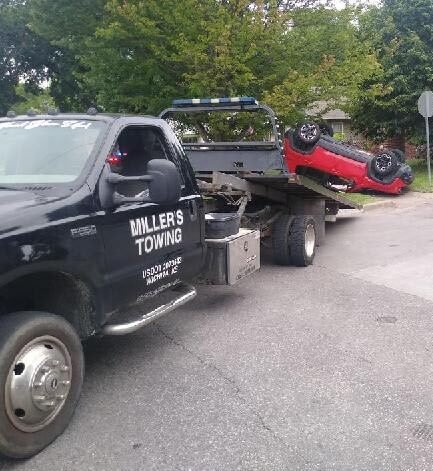
- Rollovers and cars on their side
- Vehicles down an embankment or off road
- Cars sunk in mud, snow, or standing water
When Wichita Drivers Need Auto Recovery
Most of our recovery calls come during a few kinds of trouble:
- Ice and snow. The first slick morning of winter sends cars into ditches along K-96, I-135, and the turnpike.
- Storms and flooding. Heavy rain fills low spots and underpasses, and cars stall in standing water.
- Busy highways. Crashes on Kellogg, I-235, and I-135 often leave cars in the median or on the shoulder.
- Rural roads and construction zones. Soft shoulders and gravel edges pull tires off the road fast.
If you slide off a Kansas highway, stay buckled in with your hazards on. Dial *47 to reach the Kansas Highway Patrol, then call for recovery. Getting out near traffic is the biggest danger.
The Auto Recovery Process, Step by Step
- Call and assessment. Tell dispatch where you are, what you drive, and how the car is sitting. Photos help. We send a truck with the right gear.
- Scene safety and inspection. The operator checks traffic, the ground, how the car is resting, and any fluid leaks before anything is hooked up.
- Securing the vehicle. Straps and chains go on the frame or recovery points, never the bumper or suspension.
- Extraction. A winch pulls the car out slowly while someone steers, or the car is uprighted in stages if it rolled.
- Tow and drop off. The car is loaded on a flatbed and taken to your home, your body shop, a dealer, or our yard at 4309 S Broadway.
Recovery Equipment and When It’s Used
| Equipment | Used for |
|---|---|
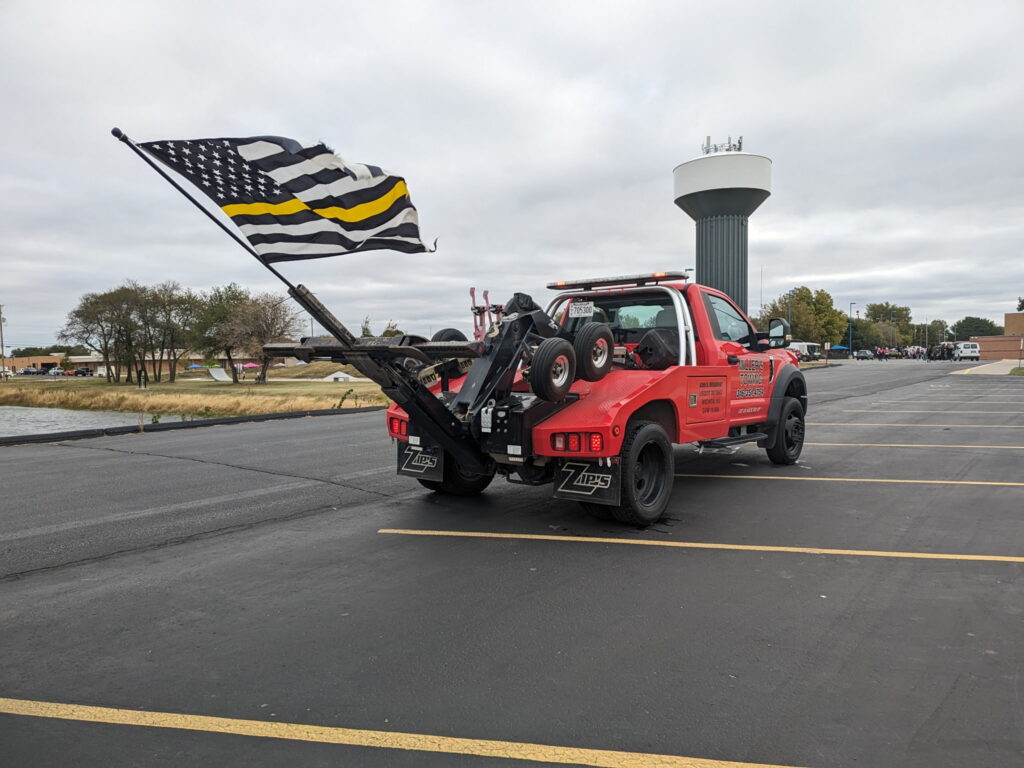
| Flatbed tow truck | Damaged, AWD, and electric cars that need all four wheels off the ground |
| Winch and cable | Pulling cars out of ditches, mud, snow, and tight spaces |
| Snatch blocks | Changing the pull angle so the car comes out straight |
| Straps and chains | Holding the car safely at the frame or recovery points |
| Skates and dollies | Moving cars with locked or broken wheels |
Who Pays for Auto Recovery?
The vehicle owner pays the tow company, and insurance often pays you back. Collision coverage usually covers recovery after a crash, and roadside coverage may cover a simple winch out. Ask your insurer before the truck arrives if you can.
For police called recoveries, Miller’s posted 2026 rates are on file with the City of Wichita emergency wrecker fee schedule: $45 per 15 minutes of light duty winching and $145 to upright a light duty rollover, plus the tow. We give you an itemized receipt and photos for your claim.
Why Professional Recovery Matters
Pulling a car out with a pickup and a strap looks easy. It often ends with a torn bumper, a bent axle, or a snapped strap flying back at someone. Recovery near traffic also puts you in the path of other cars.
Kansas law requires drivers to move over a lane, or slow down, for a stopped tow truck with flashing lights. As of 2025, the rule also covers any stopped car with its hazards on. Even so, the shoulder is a dangerous place to stand, so let a trained crew do the work.
24/7 Auto Recovery in Wichita
Miller’s Towing & Recovery has handled ditch pulls, rollovers, and crash recoveries around Wichita since 2005. You can ask the officer for us by name after a crash under Wichita Police Department Policy 404. Learn more on our accident and vehicle recovery page or in our stuck vehicle FAQs.
Frequently Asked Questions
What is the difference between towing and recovery?
Towing moves a car that sits on flat, open ground. Recovery first gets the car out of a ditch, median, mud, water, or a rollover, and then loads it. Recovery takes more time and equipment, so it costs more.
How much does vehicle recovery cost in Wichita?
It depends on how hard the pull is. Miller’s posted 2026 City of Wichita rates for light duty work are $45 per 15 minutes of winching and $145 to upright a rollover, plus the tow. You get a price on the phone before we come out.
Does insurance pay for auto recovery?
Often, yes. Collision coverage usually pays to recover and tow a wrecked car, and roadside coverage may cover a winch out. Keep the itemized receipt and photos for your claim.
Can I pull my car out of a ditch myself?
It’s risky. Straps tied to a bumper or tie down hook can snap with enough force to hurt someone, and plastic bumpers tear off. Near traffic, stay in the car and call a professional.
Car in a ditch or on its side?
Stay buckled in with your hazards on. Call dispatch for a recovery truck and a price on the phone.