
The Kansas Move Over law requires drivers to change lanes away from a stopped vehicle with flashing lights, or slow down if they cannot. It has long protected police, fire, EMS and tow trucks. Since July 1, 2025, it also covers any stationary vehicle with its hazard lights on, including yours.
We work on the shoulders of Kellogg, I-135 and K-96 every day, so this law is personal to us. Here is what it says, what it costs to ignore it and how it protects you during a breakdown.
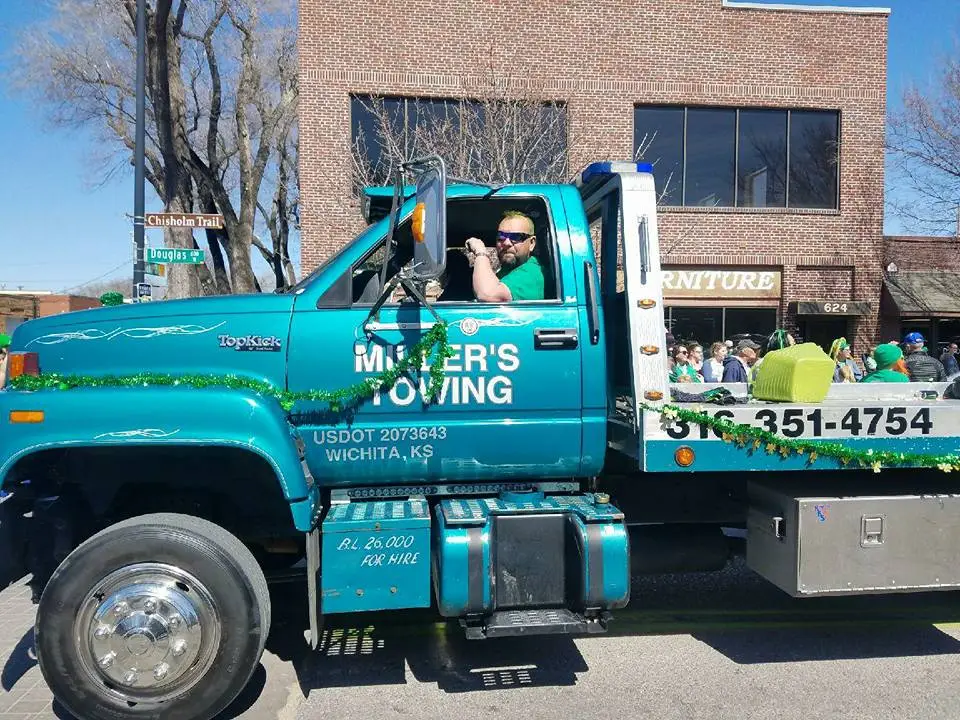
What the Kansas Move Over Law Requires
The core rule is in K.S.A. 8-1530. When you approach a stationary emergency vehicle that is using its lights:
- On a road with two or more lanes going your way: proceed with due caution and, if it is possible and safe for the road, weather and traffic, change into a lane that is not next to the stopped vehicle.
- If you cannot change lanes, or the road has one lane each way: proceed with due caution, reduce your speed and keep to a safe speed as you pass.
In plain words: move over if you can, slow down if you cannot.
What Changed in 2025
Governor Laura Kelly signed Senate Bill 8 on March 24, 2025, according to the Governor’s office. The bill extends the same duty to any stationary vehicle displaying hazard warning lights. KAKE reported that it took effect July 1, 2025, and that the law had covered emergency vehicles, tow trucks and garbage trucks before the change.
The Governor’s announcement gave the reason in one number: 82 crashes from 2018 to 2023 involved vehicles on the side of the road. AAA Kansas pushed for the bill. Its spokesman, Shawn Steward, told KAKE that AAA has had tow truck drivers struck and injured or killed along the roadside.
5 Rules Under the Kansas Move Over Law
1. Flashing lights on the shoulder mean act now
Red and blue, amber or plain hazard flashers all count. You do not have to work out what kind of vehicle it is. If it is stopped and its lights are flashing, the law applies.
2. Move over when you can do it safely
Check your mirror, signal and move one lane away. On six lane parts of Kellogg and I-135 there is usually room. Do not cut off another driver to do it. The statute says “if possible” for a reason.
3. Slow down when you cannot
If traffic boxes you in, or you are on a two lane road like much of rural Sedgwick County, ease off and pass at a safe speed. The law does not name a number. Slow enough to stop if a door opens or a person steps out is the idea.
4. The fine is $75
The Legislature’s supplemental note on Senate Bill 8 says the bill sets a $75 fine for unlawfully passing a stationary vehicle and adds it to the state’s uniform fine schedule as a traffic infraction. Court costs are added on top of a fine in Kansas.
5. It covers you when you break down
This is the part most drivers miss. Your own hazard lights now trigger the law. Turn them on the moment you start to pull over, and leave them on until the tow truck has you loaded.
Who the Kansas Move Over Law Protects
| Stopped vehicle | Covered? |
|---|---|
| Police, fire and EMS with lights on | Yes |
| Tow trucks working a scene | Yes |
| Garbage trucks | Yes |
| A stalled car with hazard lights on | Yes, since July 1, 2025 |
| A driver changing a tire with flashers on | Yes, since July 1, 2025 |
| A stopped car with no lights on | The law is triggered by lights. Give room anyway |
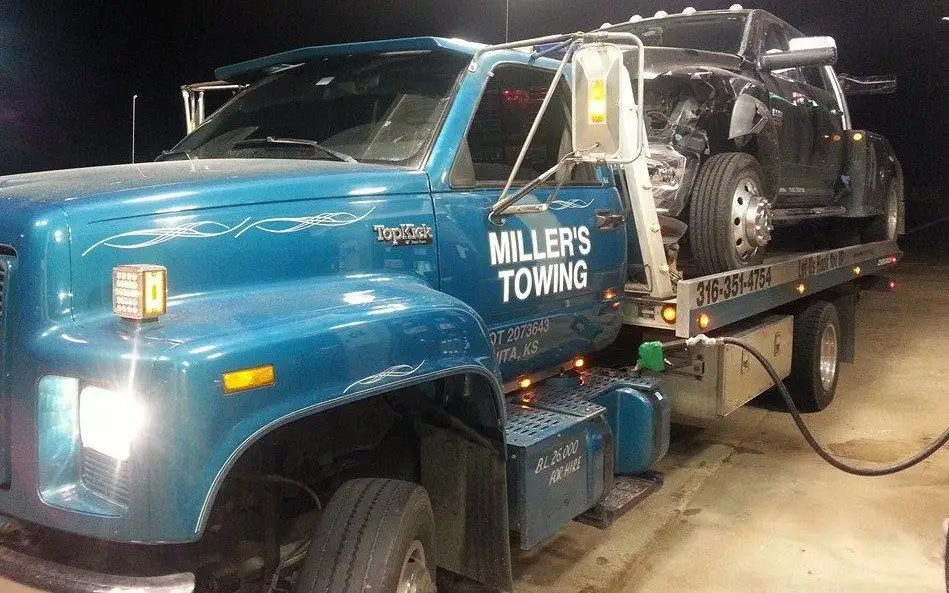
If You Break Down: Make the Law Work for You
- Hazards on first. Before you brake, before you call anyone.
- Get right. Pull as far onto the right shoulder as you can. An exit ramp or a parking lot is better still.
- Stay buckled in. On Kellogg, I-135, I-235 or K-96, stay in the car unless you see smoke or fire.
- If you must get out, use the door away from traffic and stand behind a guardrail or well off the road.
- Call for help. Dial 911 if you are in a lane. Use *47 for the Kansas Highway Patrol or *582 on the Turnpike for a stalled car that is not an emergency.
- Call a tow. Tell the dispatcher your direction and the nearest exit or mile marker.
For highway specific advice, see our guides to the Kansas Turnpike, K-254 and K-15.
Mistakes Drivers Make Near a Stopped Vehicle
- Braking hard at the last second. Ease off early so the driver behind you can react.
- Changing lanes without a mirror check. Moving over into another car helps nobody.
- Moving back too soon. Pass the whole scene, including the tow truck and any police car, before you return to the lane.
- Staring at the scene. Cars drift toward what the driver is looking at. Look where you are going.
- Thinking it only applies to police. It now applies to any stopped vehicle with flashers on.
Why Tow Operators Care So Much
A tow operator loading a car on the shoulder works with their back to traffic for several minutes. They are bent over at the wheels, hooking straps, a few feet from vehicles passing at highway speed. One distracted driver is all it takes.
When you see amber lights ahead, you are looking at someone’s workplace. One lane of space is the difference between a routine job and a tragedy.
Questions About the Kansas Move Over Law
Does Kansas have a Move Over law?
Yes. It is K.S.A. 8-1530, and it was widened by Senate Bill 8 in 2025.
Which vehicles does it apply to?
Emergency vehicles, tow trucks and garbage trucks were already covered. Since July 1, 2025, it applies to any stationary vehicle displaying hazard warning lights.
What is the fine under the Kansas Move Over law?
Senate Bill 8 set a $75 fine for unlawfully passing a stationary vehicle, plus court costs.
Does it apply on city streets or only on highways?
The statute uses the word highway, which in Kansas traffic law means any public road. So it applies on Rock Road and West Street as well as on I-135.
Do I have to move over on a two lane road?
You cannot change lanes there, so the duty is to slow down and pass with caution.
What if moving over is not safe?
Then do not force it. The law says to change lanes if possible. If it is not, reduce speed and pass carefully.
Do other states have the same law?
Every state has some form of Move Over law. The details differ, so when you cross into Oklahoma or Missouri, assume flashing lights on the shoulder mean the same thing.
Where can I read more Kansas rules on towing?
See our plain language guide to Kansas towing laws.
Stuck on the Shoulder?
The Kansas Move Over law gives you some protection. Getting off the shoulder gives you more. Call Miller’s Towing & Recovery at 316-351-4754 for emergency towing in Wichita, 24 hours a day. We are a local tow company in Wichita, KS, and you get the price before we hook up.